By Tanush Caushi
In healthcare, transformation rarely begins with infrastructure.
It begins with a shift in values.
Across Europe, over the past two decades, health systems have been shaped not only by technological progress, but by a shared commitment to principles that place the individual at the centre of care: universality, equity, quality, and solidarity. These values, formally articulated by European Union health ministers in 2006, have since evolved into a guiding framework for modern, resilient healthcare systems.
Today, Albania stands at a critical juncture—caught between legacy challenges and a growing ambition to align with European standards. The question is no longer whether reform is necessary. It is whether reform can be meaningful.
A System Under Pressure
Like many countries in the region, Albania’s healthcare system faces structural constraints that are both familiar and persistent.
Access to specialised services remains uneven, particularly outside major urban centres. Financial barriers continue to limit care for vulnerable populations. And while acute medical interventions have improved, long-term, integrated care—especially for patients with chronic conditions—remains underdeveloped.
This gap is not merely technical. It is systemic.
Chronic illness, by its nature, demands continuity: rehabilitation, psychological support, social inclusion. Yet too often, patients find themselves navigating fragmented services, bearing not only the burden of disease, but the weight of a system that struggles to accompany them beyond diagnosis.
The European Reference Point
The European model offers a different perspective.
Rather than viewing healthcare as a series of isolated interventions, it frames it as a continuum of care—one that extends from prevention to rehabilitation, and from clinical treatment to social support. At its core lies a simple but powerful premise: healthcare is a public good, grounded in solidarity and designed to leave no one behind.
This approach has become increasingly relevant in the face of contemporary challenges—ageing populations, rising chronic disease, workforce shortages, and the rapid expansion of digital health technologies. It is also a model that emphasises resilience: the ability of systems not only to respond to crises, but to adapt and endure.
For countries like Albania, the European framework is not an abstract ideal. It is a practical roadmap.
A Shift in Perspective
Recent developments suggest that Albania may be entering a phase where such a shift is possible.
The appointment of Evis Sala as Minister of Health and Social Protection has brought into government a figure shaped by international academic and clinical experience. With a career spanning institutions such as the University of Cambridge and leading medical centres in the United States and Europe, her background reflects a system where innovation, research, and patient-centred care are deeply embedded.
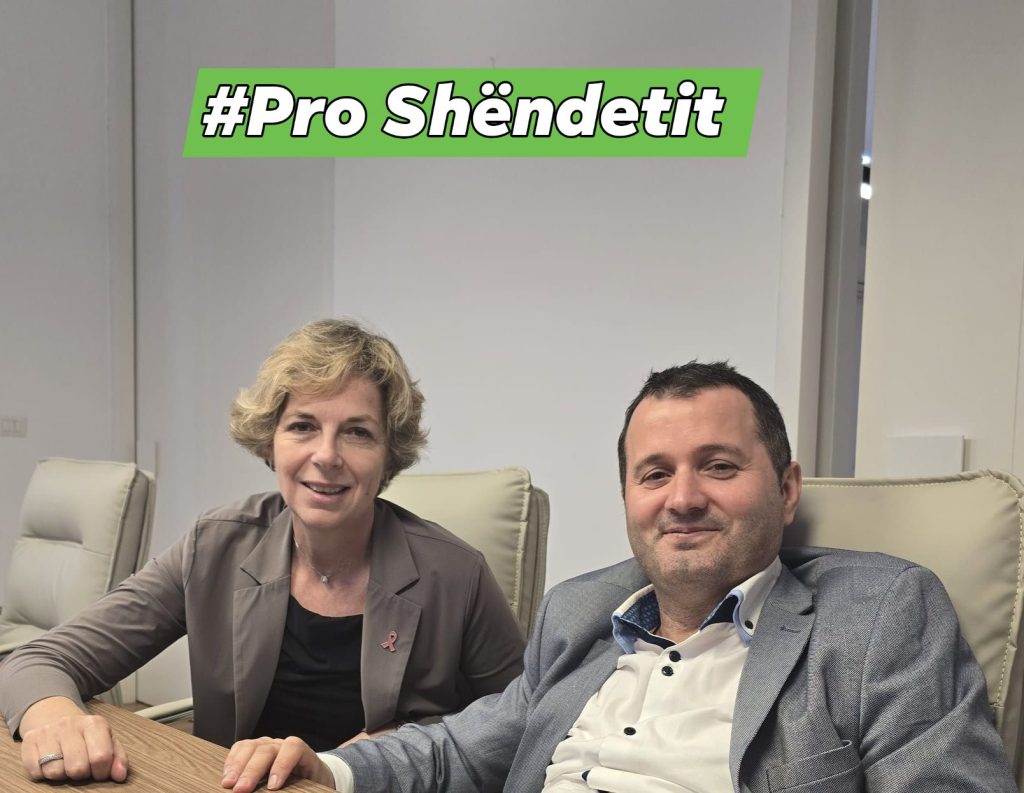
Her public statements have pointed to a fundamental insight: that the effectiveness of a healthcare system is determined less by its physical infrastructure than by how it is organised, coordinated, and managed.
This is not a minor distinction. It reframes the entire debate.
If accepted, it shifts the focus from building capacity to optimising care, from expanding services to integrating them, and from short-term interventions to long-term outcomes.
The Missing Link: RehabilitationNowhere is this shift more urgently needed than in the field of rehabilitation.
In Albania, rehabilitation services remain limited in both availability and accessibility. For patients recovering from neurological conditions, chronic illnesses, or physical impairments, the pathway to recovery is often incomplete.
This has profound implications.
Without structured rehabilitation, medical treatment alone cannot restore function, independence, or quality of life. The absence of such services not only affects individual outcomes but places additional strain on families and the broader health system.
In contrast, European health systems increasingly recognise rehabilitation as a cornerstone of care—an essential component, not an optional extension.
Civil Society at the FrontlineIn this context, civil society organisations have begun to play an increasingly visible role.
The Tree of Life Foundation (Fondacioni “Pema e Jetës”) is one such example. Through its rehabilitation centres and community-based initiatives, it has sought to address precisely those gaps that formal systems have yet to fully meet: accessible physiotherapy, continuous care for chronic patients, and the restoration of dignity through support and inclusion.
These efforts are not substitutes for systemic reform.
But they are indicators of both need and possibility.
They demonstrate that alternative models—grounded in European values, yet adapted to local realities—can be developed and sustained.
From Alignment to Implementation
The challenge now is one of translation.
Adopting European values at the level of policy is an important step. But their true significance lies in implementation—how they shape everyday interactions between patients and providers, how they influence resource allocation, and how they redefine success within the system.
This requires more than investment.
It requires coherence.
Coherence between policy and practice.
Between medical care and social support.
Between institutional structures and human needs.
A Moment That MattersMoments of transition are often difficult to recognise while they are unfolding. Yet Albania’s current trajectory suggests that such a moment may be at hand.
The convergence of international expertise, policy ambition, and grassroots engagement creates conditions in which meaningful change is not only possible, but within reach.
Whether this potential is realised will depend on choices made now—about priorities, partnerships, and the kind of system Albania seeks to build.
Healthcare systems are, ultimately, reflections of societal values.
They reveal how a society defines fairness, how it distributes care, and how it responds to vulnerability.
For Albania, the path toward European integration in health is not simply a technical process. It is a moral and institutional transformation—one that asks whether the principles of universality, equity, and solidarity can move from aspiration to reality.
The answer will not be found in policy documents alone.
It will be found in the lived experience of patients—
in whether they are seen, supported, and given the chance not only to survive, but to live with dignity.
Copyright
© 2026 Fondacioni “Pema e Jetës”
All rights reserved.